
Review: Combat Lifesaver Class: Bailey
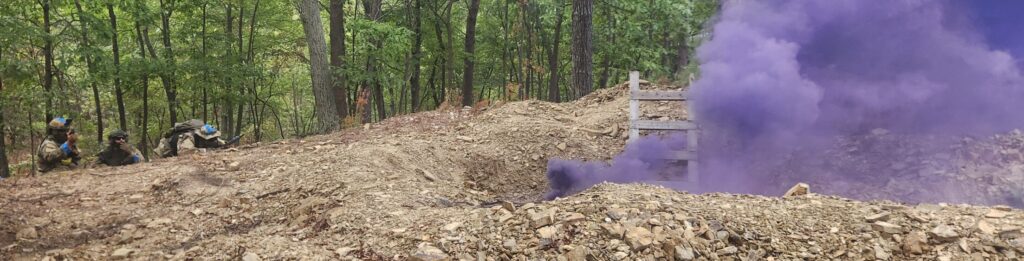
Combat Lifesaver is a new course at MVT. This is a must take class when available, that must be retaken. As Max said during the class, “you have to be able to deal with the repercussions of violence.”
This is a three day airsim class. The focus of the class is learning TC3, tactical combat casualty care. Proper procedures to reduce the possibility of death with a casualty affected with penetrating trauma, in a combat environment. This isn’t the first aid merit badge class.
The first day is a lecture with a PowerPoint slide. You learn about MARCH and what each acronym stands for and how to treat the respective area of a casualty, going back to reassess from the beginning. There are demonstrations with life saving devices that I would have little idea how to use before the class. More time practice using different kinds of tourniquets and other medical supplies will be helpful that day for the rest of the week. Friday is really the day to ask questions and get hands on. Not understanding MARCH will be noticeable for the following two days.
Following day, we started with exercises where we would approach a mass casualty event. These exercises were really good as we were able to focus on MARCH and doing proper TC3 without worry of bad guys attacking, but there was still a sense of urgency to assess, do what you can and go. We got into force-on-force later and it got crazy at times. It became too quick to forget, not only the medical, but the tactical side of the coin once two opposing sides start slinging at each other. We had people in the class who were inexperienced with the tactical knowledge, but they quickly got into the flow as most of the students this class were alumni. Some order, within the chaos, was established.
The final day we had an individual assessment of MARCH on a casualty, supervised by Max. This was the moment of the class where you know what you know, and if you don’t know, it shows. The lesson from it afterwards for me was; the first thing you see is not always the highest priority. We had another mass casualty event. Again, I’m stressing these are very good exercises for this class and should start each of the last two days with one or more as needed. We went into the trenches for the FoF portion. The setting of the trenches was a good one for TC3. Fresh bodies to the front, casualties to the rear, and idle guys working on casualties. Don’t have to worry so much about whether or not you are now in the tactical field case phase to help a casualty or you are about to be shot because the fight isn’t over.
I suggested switching the trenches to Saturday instead of being the last day. Fighting in the open valley got crazy quick and the tactical field care phase isn’t attainable until, after the fight is over and OPFOR is wiped, that you then can go back and try to save casualties. Unless maybe there is dead ground and good cover in the little ravine? Another suggestion is to have maybe one of the instructors, or the students themselves, carries timers for this class specifically for the first casualties, or all of them, to be timed to see how long until they get treated, or don’t.
As more people take this class, I would like to see a Combat Lifesaver Role maybe be introduced for a mission or two at Squad Tactics, the person should be the most reliable or so of that class, in my opinion. One thing about the class I noticed was that there is a big difference, when you are a casualty being treated, between the guy who has been an EMT for 5 years calmly talking to you as he works through MARCH efficiently, versus the family guy freaking out, reading the instruction procedure paper, trying to provide care, who may or may not miss something. It makes you realize, when you are the casualty, who you rather have to keep you alive. And the other side of it, you are not the EMT with five years experience. Five years experience takes five years to get to, start learning.
This is a skill too. And, knowing how to save a life may be arguably more valuable than knowing how to take one. If you’ve been to a class at MVT, You MUST take this class. I highly recommend it. In the same way a HEAT 1 opens your eyes to how little you actually know, Combat Lifesaver opens your eyes about the reality of being hit in the face by hitting you in the face, metaphorically. And the neck, and the chest, and the arms, and in the legs. Torn flesh and exposing bones. People are gonna be messed up real bad. Can you look ‘em in the eye and help?
Max Velocity Tactical YouTube Link
TRAINING CALENDAR
TRAINING AT MVT
Novels and Manuals Available!
Must Read Tactical and War Thrillers!
All available on Amazon.com or via reputable booksellers.

Books in the series:
Book 1: Patriot Dawn: The Resistance Rises.
Book 2: Patriot Rising: The Unbroken.
Book 3: The Storm Rages: Dragon Rising
Non-Fiction Manuals Available:

Tactical Manual: Small Unit Tactics
Contact: A Tactical Manual for Post-Collapse Survival
Sign up on the bottom of the Home Page for Emails!
Leave a Reply